
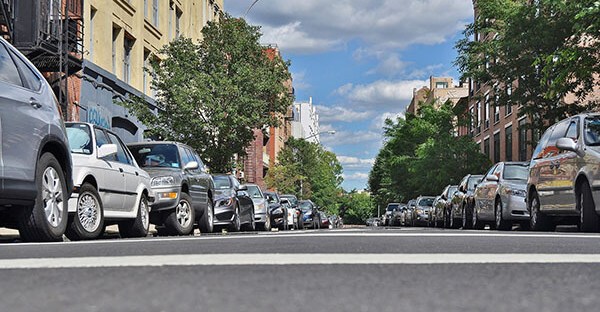
I’ve never been comfortable with the term Parallel Parking. If you look at a line of cars that are “parallel” parked, they’re not parallel to each other. They’re parallel to the curb (well, some are), but what if there’s no curb? What if they’re parked one behind the other in a field? Also, is there a curb present in the parking portion of the driving test? Not always. Many times there are just two cones and, because they’re cones, one can’t be parallel to the other.
The term “Parallel Parking” is counter-intuitive. A more correct term would describe the parked vehicles’ relation to each other: Collinear Parking.
What if there’s just one parked car? By the current definition the car would be parallel parked if it’s parallel to the curb. However, anyone looking at it would say that it’s just parked. In contrast, it wouldn’t fit the definition of, and no one would say that it was, collinear parked. Add another car and an observer would say they’re “parallel parked” because they would be one behind the other, curb be damned. Yet the curb is crucial to the current definition. The cars would, of course, be collinear to each other.
The position of these cars is collinear.
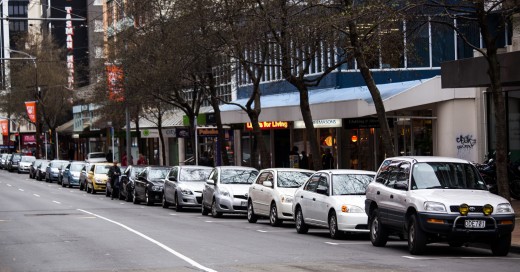
These cars are parked parallel to each other.
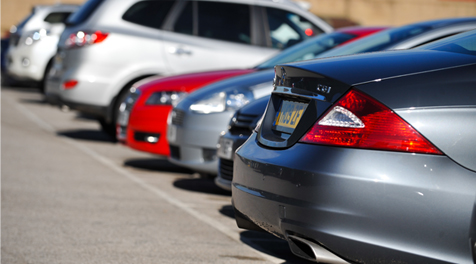
It’s all relative. And an extra syllable.
~ Dempsey 🌵
 Chalk Dust